

Journey across Madagascar, the oldest island on Earth. Over time, it has given rise to more unique plants and animals, from its lemurs to chameleons, than any other island.
- TV-Recordings
- English subtitles
- 58
Journey across Madagascar, the oldest island on Earth. Over time, it has given rise to more unique plants and animals, from its lemurs to chameleons, than any other island.
-
Earths Tropical Islands - Series 1 - Episode 2 - Borneo
-
Mark Brownlow
A journey from Borneo's rich coral reefs, through lush jungles to its mountainous heart, revealing why this island is home to a greater variety of life than almost any other.
- TV-Recordings
- English subtitles
- 59
A journey from Borneo's rich coral reefs, through lush jungles to its mountainous heart, revealing why this island is home to a greater variety of life than almost any other.

-
Earths Tropical Islands - Series 1 - Episode 3 - Hawaii
-
Mark Brownlow
Exploring Hawaii, a tropical sanctuary for any wildlife that can reach its remote shores. From humpback whales to waterfall-climbing fish, it is home to an extraordinary wealth of wildlife.
- TV-Recordings
- English subtitles
- 59
Exploring Hawaii, a tropical sanctuary for any wildlife that can reach its remote shores. From humpback whales to waterfall-climbing fish, it is home to an extraordinary wealth of wildlife.
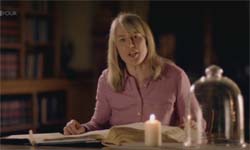
The air around us is not just empty space; it is an integral part of the chemistry of life. Plants are made from carbon dioxide, nitrogen nourishes the soil and oxygen gives us the energy we need to keep our hearts pumping and our brains alive. But how did we come to understand what air is made of? How did we come to know that this invisible stuff around us contains anything at all?
- TV-Recordings
- Chemistry
- English subtitles
- 60
The air around us is not just empty space; it is an integral part of the chemistry of life. Plants are made from carbon dioxide, nitrogen nourishes the soil and oxygen gives us the energy we need to keep our hearts pumping and our brains alive. But how did we come to understand what air is made of? How did we come to know that this invisible stuff around us contains anything at all?
-
Evolution - Series 1
-
Tom Hewitson
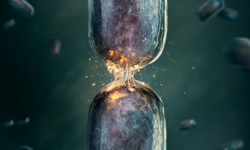
From a single spark of life, through millions of generations, animals have become diverse, weird and beautiful. Chris Packham tells the incredible story in astonishing new detail.
- TV-Recordings
- English subtitles
- 289
From a single spark of life, through millions of generations, animals have become diverse, weird and beautiful. Chris Packham tells the incredible story in astonishing new detail.
-
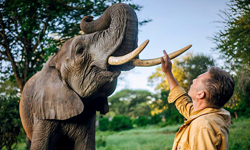
Evolution - Series 1 - Episode 1 - The Elephant
-
Tom Hewitson
How did the elephant get so big? Chris Packham explores the four-billion-year story of how a tiny cell evolved into complex, gentle giants.
- TV-Recordings
- English subtitles
- 58
How did the elephant get so big? Chris Packham explores the four-billion-year story of how a tiny cell evolved into complex, gentle giants.
-
Evolution - Series 1 - Episode 2 - The Ostrich
-
Laura Mulholland
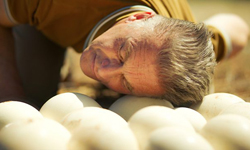
How did the ostrich come to lay the biggest egg on earth? Chris Packham explores the way reproduction has shaped life on earth and the surprising evolutionary origins of sex, eggs and birds. It's a four-billion-year journey contained within a shell.
- TV-Recordings
- English subtitles
- 58
How did the ostrich come to lay the biggest egg on earth? Chris Packham explores the way reproduction has shaped life on earth and the surprising evolutionary origins of sex, eggs and birds. It's a four-billion-year journey contained within a shell.
-
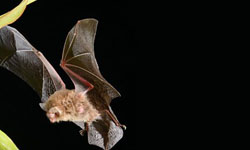
Evolution - Series 1 - Episode 3 - The Bat
-
Fleur Bone
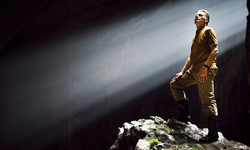
How did the bat get so hungry? Chris Packham explores how the drive to find food has shaped animal life. The origin of bums, guts, jaws and super hearing.
- TV-Recordings
- English subtitles
- 58
How did the bat get so hungry? Chris Packham explores how the drive to find food has shaped animal life. The origin of bums, guts, jaws and super hearing.

How did the dolphin get so smart? Chris Packham explores the origins of senses, brains and intelligence, in an evolutionary odyssey that ventures from ocean to land and back again.
- TV-Recordings
- English subtitles
- 58
How did the dolphin get so smart? Chris Packham explores the origins of senses, brains and intelligence, in an evolutionary odyssey that ventures from ocean to land and back again.
-
Evolution - Series 1 - Episode 5 - The Horse
-
Clementine Cheetham
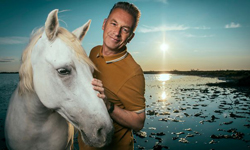
How did the horse become so fast? Chris Packham sets out on a slithering, swimming, sprinting odyssey that explores the evolutionary beginnings of animal movement and how it reached its peak in one of the most elegant and athletic animals on earth: the horse.
- TV-Recordings
- English subtitles
- 58
How did the horse become so fast? Chris Packham sets out on a slithering, swimming, sprinting odyssey that explores the evolutionary beginnings of animal movement and how it reached its peak in one of the most elegant and athletic animals on earth: the horse.
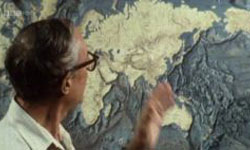
Dallas Campbell delves in to the Horizon archive to discover how our ideas about dinosaurs have changed over the past 40 years.
- TV-Recordings
- Biology
- TV-Recordings
- English subtitles
- 60
Dallas Campbell delves in to the Horizon archive to discover how our ideas about dinosaurs have changed over the past 40 years.

In this episode Brian uncovers how the stunning diversity of shapes in the natural world are shadows of the rules that govern the universe. In Spain he shows how an attempt by hundreds of people to build the highest human tower reveals the force that shapes our planet.
- TV-Recordings
- English subtitles
- 60
In this episode Brian uncovers how the stunning diversity of shapes in the natural world are shadows of the rules that govern the universe. In Spain he shows how an attempt by hundreds of people to build the highest human tower reveals the force that shapes our planet.
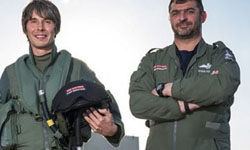
Professor Brian Cox follows Earth's epic journey through space. He takes to the air in a top-secret fighter jet to race the spin of the planet and reverse the passage of the day.
- TV-Recordings
- English subtitles
- 60
Professor Brian Cox follows Earth's epic journey through space. He takes to the air in a top-secret fighter jet to race the spin of the planet and reverse the passage of the day.

In this episode, Professor Brian Cox shows how Earth's basic ingredients, like the pure sulphur mined in the heart of a deadly volcano in Indonesia, have become the building blocks of life. Hidden deep in a cave in the Dominican Republic lies a magical world created by the same property of water that makes it essential to life.
- TV-Recordings
- English subtitles
- 60
In this episode, Professor Brian Cox shows how Earth's basic ingredients, like the pure sulphur mined in the heart of a deadly volcano in Indonesia, have become the building blocks of life. Hidden deep in a cave in the Dominican Republic lies a magical world created by the same property of water that makes it essential to life.

In this final episode Professor Brian Cox travels to Iceland, where the delicate splendour of a moonbow reveals the colours that paint our world, and he visits a volcano to explain why the sun shines.
- TV-Recordings
- English subtitles
- 60
In this final episode Professor Brian Cox travels to Iceland, where the delicate splendour of a moonbow reveals the colours that paint our world, and he visits a volcano to explain why the sun shines.

-
Forces of Nature with Brian Cox
-
BBC
Professor Brian Cox combines some of the most spectacular sights on Earth with our deepest understanding of the universe to reveal how the planet's beauty is created by just a handful of forces.
- TV-Recordings
- English subtitles
- 240
Professor Brian Cox combines some of the most spectacular sights on Earth with our deepest understanding of the universe to reveal how the planet's beauty is created by just a handful of forces.

David Attenborough travels to the end of the earth, taking viewers on an extraordinary journey across the polar regions of our planet, North and South.
- TV-Recordings
- Biology
- Environmental Studies
- TV-Recordings
- English subtitles
- 60
David Attenborough travels to the end of the earth, taking viewers on an extraordinary journey across the polar regions of our planet, North and South.

Spring arrives in the polar regions, and the sun appears after an absence of five months; warmth and life return to these magical ice worlds - the greatest seasonal transformation on our planet is underway.
- TV-Recordings
- Biology
- Environmental Studies
- TV-Recordings
- English subtitles
- 60
Spring arrives in the polar regions, and the sun appears after an absence of five months; warmth and life return to these magical ice worlds - the greatest seasonal transformation on our planet is underway.

It is high summer in the polar regions, and the sun never sets. Vast hordes of summer visitors cram a lifetime of drama into one long, magical day; they must feed, fight and rear their young in this brief window of plenty.
- TV-Recordings
- Biology
- Environmental Studies
- TV-Recordings
- English subtitles
- 60
It is high summer in the polar regions, and the sun never sets. Vast hordes of summer visitors cram a lifetime of drama into one long, magical day; they must feed, fight and rear their young in this brief window of plenty.
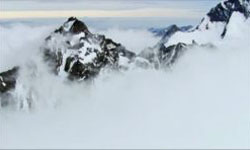
For the animals in the polar regions, autumn means dramatic battles and epic journeys. Time is running out - the Arctic Ocean is freezing over and the sea ice is advancing at 2.5 miles per day around Antarctica.
- TV-Recordings
- Biology
- Environmental Studies
- TV-Recordings
- English subtitles
- 60
For the animals in the polar regions, autumn means dramatic battles and epic journeys. Time is running out - the Arctic Ocean is freezing over and the sea ice is advancing at 2.5 miles per day around Antarctica.
There is no greater test for life than winter, as temperatures plummet to 70 below and winds reach 200kph. Darkness and ice extend across the polar regions and only a few remarkable survivors gamble on remaining.
- TV-Recordings
- Biology
- Environmental Studies
- TV-Recordings
- English subtitles
- 60
There is no greater test for life than winter, as temperatures plummet to 70 below and winds reach 200kph. Darkness and ice extend across the polar regions and only a few remarkable survivors gamble on remaining.

David Attenborough reveals the vast wildnerness of the polar regions and their inhabitants. At the North Pole, the sun returns after six months of darkness.
- TV-Recordings
- Biology
- Environmental Studies
- TV-Recordings
- English subtitles
- 60
David Attenborough reveals the vast wildnerness of the polar regions and their inhabitants. At the North Pole, the sun returns after six months of darkness.
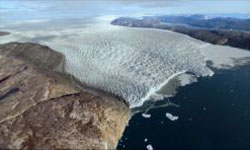
David Attenborough journeys to both polar regions to investigate what rising temperatures will mean for the people and wildlife that live there and for the rest of the planet.
- TV-Recordings
- Biology
- Environmental Studies
- TV-Recordings
- English subtitles
- 60
David Attenborough journeys to both polar regions to investigate what rising temperatures will mean for the people and wildlife that live there and for the rest of the planet.

This Frozen Planet special brings together the very best highlights of the series, taking viewers on a spectacular journey through the entire polar year - from the depths of winter to the melting world of the polar summer.
- TV-Recordings
- Biology
- Environmental Studies
- TV-Recordings
- English subtitles
- 60
This Frozen Planet special brings together the very best highlights of the series, taking viewers on a spectacular journey through the entire polar year - from the depths of winter to the melting world of the polar summer.

-
Frozen Planet II
-
David Attenborough
Life in the extreme. In a fragile world of beauty and hostility, nature finds a way to survive and thrive. Sir David Attenborough explores a planet on the brink of major change.
- TV-Recordings
- English subtitles
- 348
Life in the extreme. In a fragile world of beauty and hostility, nature finds a way to survive and thrive. Sir David Attenborough explores a planet on the brink of major change.
This Frozen Planet special brings together the very best highlights of the series, taking viewers on a spectacular journey through the entire polar year - from the depths of winter to the melting world of the polar summer.
- TV-Recordings
- Natural World
- TV-Recordings
- English subtitles
- 60
This Frozen Planet special brings together the very best highlights of the series, taking viewers on a spectacular journey through the entire polar year - from the depths of winter to the melting world of the polar summer.

-
Galapagos Series 1
-
BBC
Liz Bonnin joins a scientific team on an expedition across the Galapagos Islands to carry out important research that will help protect the islands and their inhabitants.
- TV-Recordings
- Natural World
- English subtitles
- 180
Liz Bonnin joins a scientific team on an expedition across the Galapagos Islands to carry out important research that will help protect the islands and their inhabitants.
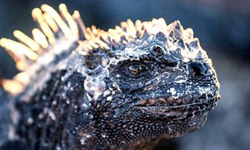
Liz Bonnin joins a scientific team aboard the research vessel the Alucia on an expedition across the Galapagos Island.
- TV-Recordings
- Natural World
- English subtitles
- 60
Liz Bonnin joins a scientific team aboard the research vessel the Alucia on an expedition across the Galapagos Island.
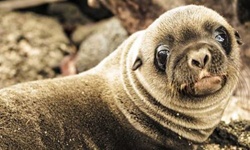
On the second leg of this incredible mission, Liz Bonnin and a team of scientific experts set off beneath the waves to explore this spectacular archipelago. It is an exciting opportunity for the team to delve into a world that still largely remains a mystery to science.
- TV-Recordings
- Natural World
- English subtitles
- 60
On the second leg of this incredible mission, Liz Bonnin and a team of scientific experts set off beneath the waves to explore this spectacular archipelago. It is an exciting opportunity for the team to delve into a world that still largely remains a mystery to science.
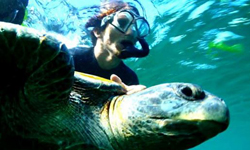
In the culmination of this 1,000km scientific expedition aboard the Alucia, Liz Bonnin and the team of scientific experts journey south to visit the oldest islands in the Galapagos to see first-hand the impact that humans have had on this pristine wilderness.
- TV-Recordings
- Natural World
- English subtitles
- 60
In the culmination of this 1,000km scientific expedition aboard the Alucia, Liz Bonnin and the team of scientific experts journey south to visit the oldest islands in the Galapagos to see first-hand the impact that humans have had on this pristine wilderness.